Every building has a foundation, of course, but how often have you asked yourself how much weight it actually really rests on? In all likelihood, you never have, but then one day, you see a crack creep along the basement wall or the deck has started to sag, and that question suddenly becomes very relevant. It doesn’t matter if you’re building new, reinforcing an old structure, or are just curious about how everything stays standing in the first place. Understanding helical piles’ load capacity can be the difference between a lasting foundation and an expensive repair you definitely want to avoid.
At GAMCON, engineered foundation support in Ontario is our specialty. Our services span the range between precision-driven helical pile installation to complete foundation underpinning across Canada, so we’re able to provide the perfect solution, no matter the situation. Today, let’s demystify the actual weight capacity and performance of helical piles. This includes a look at why professional design, torque measurement, and soil testing are all a must for safe, code-compliant results.
Key Takeaways
- Helical piles transfer structural loads deep into stable soil layers for superior, long-term foundation stability.
- Load capacity depends on soil type, pile size, installation torque, and depth.
- The torque correlation method (T = K × Q) is a reliable way to estimate real-world load-bearing strength.
- GAMCON’s engineers use digital torque monitoring and load testing to verify every installation.
- Professional design ensures safety, compliance, and warranty-backed performance for both residential and commercial helical piles.
What Are Helical Piles (and Why They Matter)
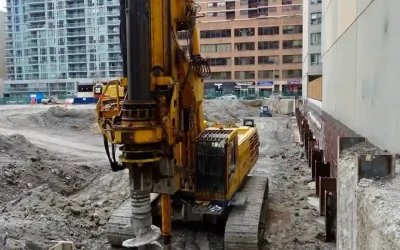
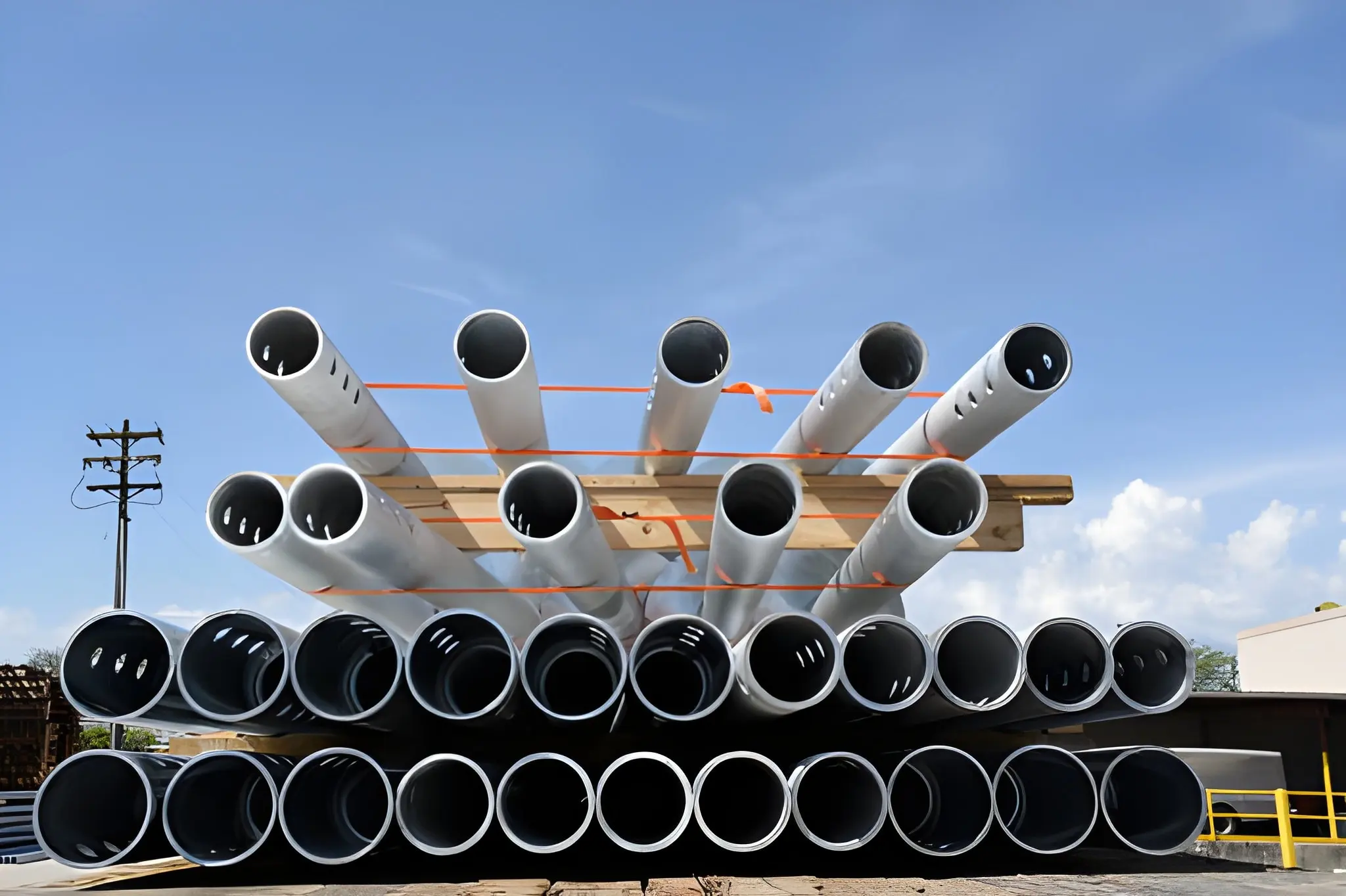
Let’s start with the question: What are helical piles in the first place? Think of them as giant metal screws that anchor your structure deep into the earth. Imagine a large steel shaft that has one or more helical plates, those spiral-shaped blades you might recognize from an auger, attached to it. During the installation, those plates “screw” into the soil until they hit a stable, load-bearing layer.
Now, helical piles aren’t just for new homes or buildings; they can also be used for foundation repair, deck stabilization, and underpinning existing structures, especially when soil settlement becomes a problem. Compared to the traditional concrete piers, helical piles are a lot faster to install, require only minimal excavation and can be used year-round, even when the ground is frozen.
Our engineers track every turn of the shaft so that they can measure the applied torque on the fly. And this torque isn’t just a number; it’s the direct indicator of the pile’s load-bearing potential. That’s the beauty compared to traditional concrete: it’s precision you can measure, and strength you can prove.
How Load Capacity Is Determined
Even though typically, everybody talks about load capacity as if it’s just the weight that rests on the ground, there are actually three main forces that a pile must handle:
- Axial compression load: the vertical weight of your structure pressing downward.
- Tensile (uplift) load: upward forces like wind, frost heave, or hydrostatic pressure.
- Lateral load: sideways forces caused by soil movement, slope pressure, or seismic activity.
In the same way, there are several factors that influence how much weight a helical pile can support:
- Soil bearing capacity and the type of load-bearing strata
- Helix plate diameter and number of helices (more surface area = more resistance)
- Shaft diameter and wall thickness
- Installation depth (must extend below the frost line for year-round stability)
- Installation torque and the torque-to-capacity ratio used to verify performance
To measure torque, our engineers use the torque correlation method, which is T = K × Q, where T is the installation torque and K is the empirical constant representing the relationship between torque and load capacity. This method ensures that the pile isn’t just installed to depth, but also installed to achieve the best possible performance.
All of our field technicians are equipped with digital torque monitors to track every rotation in real time. That means when we sign off on a pile’s capacity, we’re basing it on verifiable data, not guesswork, and it shows in the results.
Also Read: Common Myths About Helical Piles
Typical Load Capacities for Helical Piles
The actual helical pile’s load capacity depends heavily on local soil conditions and engineered design, so there is no one-size-fits-all approach to it. But to give you a general sense, here’s a comparison of typical capacities for both residential and commercial applications:
| Pile Type | Shaft Diameter | Helix Configuration | Typical Torque (ft-lb) | Estimated Load Capacity (lbs) | Typical Application |
| Light-Duty Residential | 1.5” – 1.75” | Single 8” helix | 1,000 – 1,500 | 8,000 – 15,000 | Decks, small sheds, porches |
| Standard Residential | 2” – 2.5” | Dual 8”–10” helices | 2,000 – 3,000 | 16,000 – 30,000 | Home additions, sunrooms, garages |
| Heavy-Duty Residential | 2.875” – 3.5” | Triple 10”–12” helices | 3,500 – 5,000 | 35,000 – 50,000 | Foundation underpinning, small commercial structures |
| Commercial/Industrial | 4”+ | Multi-helix 10”–14” | 6,000 – 10,000+ | 60,000 – 100,000+ | Multi-storey buildings, retaining walls, solar arrays |
Note: Final capacities are verified by on-site torque readings, load testing, and engineering review.
Every one of our projects includes a full load-testing and certification process to validate results against CSA S850 and other Canadian engineering standards. With this approach, we ensure that your structure rests on verified, dependable support and not just “rule-of-thumb” estimates.
Understanding Design Safety Factors
Even if a helical pile can theoretically handle 40,000 pounds, our engineers don’t just stop there. A safety factor, typically between 2.0 and 3.0, is applied to account for variables such as soil variability and long-term settlement. That means a pile designed for a 20,000-pound working load may have an ultimate capacity of 40,000–60,000 pounds, depending on the specific circumstances.
This approach aligns with Canadian Foundation Engineering standards, ensuring that every pile meets the required margin of safety. Here at GAMCON, we don’t just strictly design to code, but we design to confidence. That means that we verify every single pile installation with field torque readings and confirm them through structural load testing when required. This kind of attention to detail is what separates professional engineering from “good enough.”
How Installation Torque Correlates to Weight Support
So, let’s talk numbers. The torque-to-capacity ratio is the bridge between installation data and real-world performance. The formula is straightforward:
Q₍ult₎ = K × T
Where:
- Q₍ult₎ = ultimate pile capacity (in pounds or kilonewtons)
- K = empirical constant (typically 8–12 ft·lb per kN or equivalent)
- T = installation torque
For example:
If the installation torque measures 1,000 ft·lb and the K value is 10, the pile capacity is approximately 10,000 lb.
That’s why torque monitoring is so important. It’s not just a collection of data, but actual proof that the foundation of your structure can really carry the designed load. With GAMCON’s precision instrumentation, we log torque in real-time to confirm design targets during every installation as it occurs.
Also Read: Guide to Helical Pile Installation for Residential and Commercial Projects
Epoxy vs Concrete Piers — A Quick Comparison
Helical piles have been a dominant feature in modern deep foundation solutions; let’s quickly compare them to traditional concrete piers. Concrete requires excavation, curing time, and can’t be easily verified for load until after it has set, which would add a significant amount of time to the process. Helical piles, by contrast, are installed quickly, perform immediately, and come with measurable torque data to confirm strength on the spot.
Here’s the quick breakdown:
| Feature | Helical Piles | Concrete Piers |
| Installation Time | Hours | Days (including curing) |
| Excavation Required | Minimal | Significant |
| Load Verification | Immediate (torque) | Post-curing testing |
| Weather Dependence | Works year-round | Limited in cold weather |
| Environmental Impact | Low (less concrete use) | High carbon footprint |
Ontario soil conditions can vary greatly, even within the same community, so precision is critical and helical piles can provide that in real-time.
Book a site load analysis with GAMCON’s structural team to see how engineered piles compare for your project.
Why Choose GAMCON for Helical Pile Installation in Ontario
GAMCON is one of Ontario’s trusted leaders in helical pile design and installation, with over 25 years of experience across residential, commercial, and industrial foundation work. Our credentials speak volumes:
- Licensed installers and professional engineers on every project
- Certified torque monitoring and load testing
- Tailored designs for local soil bearing capacity and frost depth
- Warranty-backed foundation underpinning and stabilization systems
When you partner with GAMCON, you’re not just getting piles in the ground; you’re getting peace of mind, verified strength, and a foundation built to last.
Build on a strong foundation and schedule your free helical pile consultation with GAMCON today!
Also Read: How Many Helical Piers Do You Need For Your Foundation?
FAQs
How much weight can a single helical pile support?
Depending on soil conditions and pile configuration, a single helical pile can typically support anywhere from 8,000 to over 100,000 pounds.
Are helical piles suitable for heavy commercial buildings?
Yes. With proper design and load testing, commercial helical piles can safely support multi-storey structures and industrial loads.
Do soil conditions in Ontario affect load capacity?
Absolutely. Ontario’s diverse soil, from clay to shale, requires site-specific testing to ensure proper pile sizing and depth.
How deep do helical piles go?
They’re typically installed well below the frost line, which can range from 4 to 8 feet, but, depending on the actual soil profiles, may reach deeper layers.
How do I know how many piles my structure needs?
A foundation load analysis by a professional engineer determines both the number and placement of piles for optimal support.
Are helical piles better than concrete piers for my home?
In most cases, yes. They’re faster, cleaner, and deliver measurable strength immediately. To learn more, read Why Helical Piles Are the Best for Foundation Stabilization.