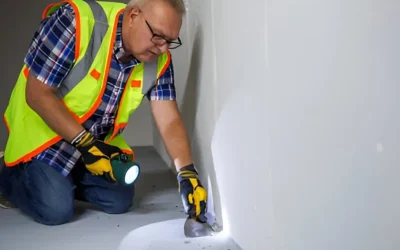
There are few things in life that make a Toronto homeowner’s heart sink faster than walking downstairs after a heavy rainfall and feeling a squelch underfoot. The panic sets in immediately. You start worrying about mould, your stored belongings, and the structural integrity of your biggest asset. But once the initial shock wears off and you start looking for a solution, a new worry often creeps in: the red tape.
You might be asking yourself, “Do I really need to get the City involved in this?” It is a fair question. Dealing with municipal bylaws can feel a little like trying to fold a fitted sheet, confusing, frustrating, and something you would rather avoid if possible. However, when it comes to keeping your home dry and your investment safe, cutting corners on paperwork can be just as damaging as cutting corners on the construction itself.
At GAMCON, we have negotiated the labyrinth of Toronto’s building codes more times than we can count. We believe that an informed homeowner is a protected homeowner. So, let’s clear up the confusion surrounding permits and get you on the path to a dry, compliant basement.
Key Takeaways for Toronto Homeowners
- It’s Not Always Yes or No: Whether you need a permit depends heavily on the scope of work, specifically if you are altering structural elements or plumbing systems.
- The “Hidden” Risks: Skipping a permit doesn’t just risk a fine; it can void your insurance coverage and kill a potential real estate sale down the road.
- Drainage Matters: Connecting new weeping tiles or sump pumps to the city’s storm sewers almost always triggers a permit requirement.
- Contractor Responsibility: While the homeowner is legally liable, a reputable waterproofing contractor Toronto trusts should handle the application process for you.
Why Permit Requirements Matter for Basement Waterproofing
You might be tempted to think of a building permit as just a cash grab by the city or a piece of paper that slows down your renovation. We get it. Nobody wakes up in the morning excited to pay administrative fees. However, permit requirements exist for a reason, and ignoring them can have serious ripple effects on your life and your wallet.
First and foremost, permits ensure safety. Basement waterproofing often involves digging around your foundation or altering how water flows around your property. If this is done incorrectly, you aren’t just looking at a wet basement; you could be looking at a collapsed foundation wall or a flooded neighbour’s yard. The permit process ensures that a qualified inspector reviews the plans to confirm they meet the Ontario Building Code.
Besides safety, there are the financial and legal implications. Imagine you decide to sell your home in a few years. Smart buyers (and their home inspectors) will ask for proof of permits for major work. If you cannot provide them, you might be forced to lower your asking price or, worse, the buyer could walk away entirely. Furthermore, if you experience a flood and your insurance company discovers the waterproofing work was unpermitted and non-compliant, they may have grounds to deny your claim. That is a risk simply not worth taking.
Do You Need a Permit for Basement Waterproofing in Toronto?
If you want the short answer: It depends.
If you want the accurate answer: It depends on whether you are simply sealing a surface or fundamentally changing the drainage and structure of the building.
The City of Toronto differentiates between “repair” and “alteration.” Generally speaking, minor repairs that restore the building to its original condition might not need a permit. However, modern basement waterproofing Toronto projects often go beyond simple patches. They involve installing sophisticated drainage systems, redirecting water flow, and sometimes reinforcing the foundation itself.
When you start digging or changing plumbing, you enter the territory where the city wants to know what you are doing. The goal is to ensure that your new basement waterproofing system doesn’t overwhelm the city’s sewer system or compromise the structural stability of your house.
When a Permit Is Required for Basement Waterproofing
Let’s break this down into specific scenarios so you can see where your project likely falls.
Exterior Basement Waterproofing
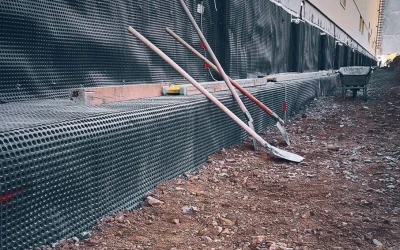
Exterior waterproofing is the gold standard for keeping water out, but it is also the most invasive method. It typically involves excavating the soil around the perimeter of your home down to the footing.
You generally need a permit for exterior basement waterproofing if:
- You are repairing or replacing the drainage system (weeping tile): The moment you touch the weeping tile (the pipe that sits at the base of your footing), you are altering the building’s drainage system. The city requires an inspection to ensure the new pipe is connected correctly and won’t cause backups.
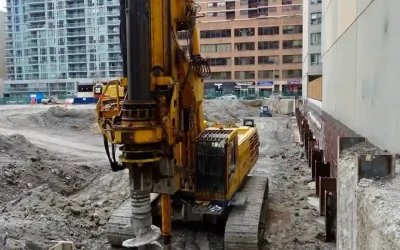
- The excavation is deep or extensive: Digging a trench around your home can affect the soil stability. If not properly shored up, it creates a safety hazard.
- You are adding a new connection to the storm sewer: Any time you tap into municipal infrastructure, you need permission.
Interior Basement Waterproofing Systems
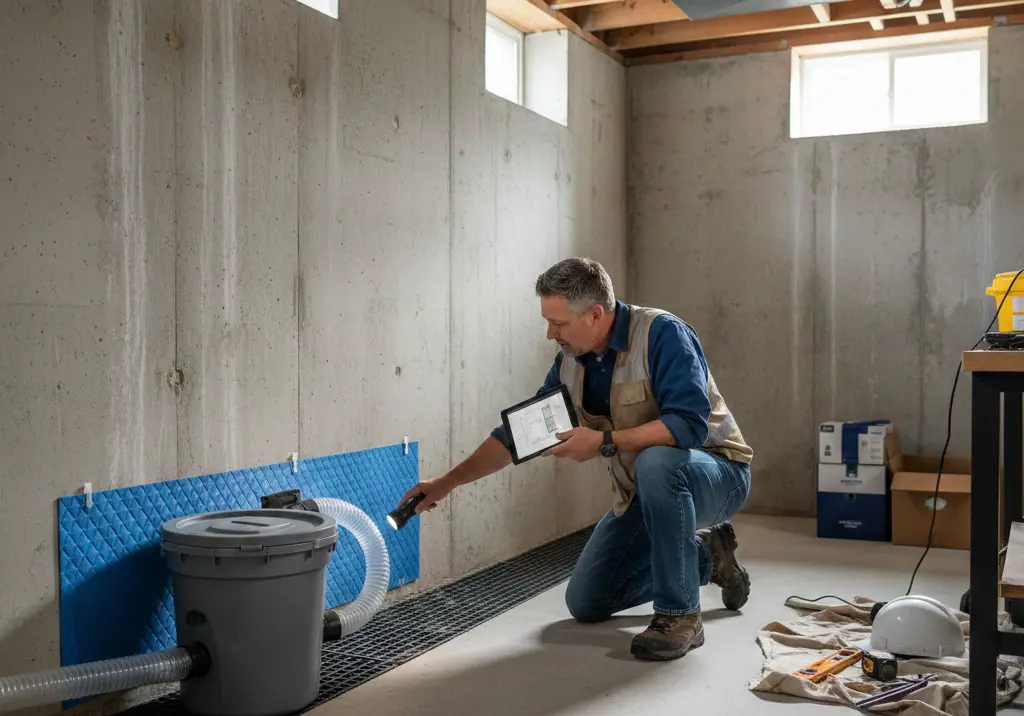
Many homeowners opt for an interior solution that manages water after it enters the foundation walls, but before it ruins your finished basement. This usually involves a drainage membrane and an internal weeping tile system.
You will likely need an interior basement waterproofing permit if:
- You are installing a sump pump: it actively pumps water out of your basement. The city regulates where this water goes (it usually cannot go into the sanitary sewer). Installing the pump and the discharge piping requires plumbing approval.
- You are breaking the concrete slab: To install an internal drainage channel, we have to jackhammer a trench along the perimeter of your floor. This counts as an alteration to the basement floor assembly.
- You are altering the plumbing: If you are adding a backwater valve (which is highly recommended in Toronto) alongside your waterproofing, a plumbing permit is mandatory.
Foundation Alterations or Structural Repairs
Sometimes, a wet basement is a symptom of a much larger structural issue. If your walls are bowing or you plan to lower your basement floor (underpinning) to gain ceiling height while you waterproof, the stakes are higher.
A foundation waterproofing permit Toronto officials will approve is strictly required if:
- You are underpinning: This is a major structural change that involves digging under the existing footing. It requires engineering drawings and strict inspections.
- You are repairing large structural cracks: While injecting a hairline crack is maintenance, repairing a crack that affects the wall’s load-bearing capacity often requires a permit and an engineer’s stamp.
Also Read: Basement Waterproofing Myths That Could Cost You Thousands
When a Permit Is Not Required
Now for some good news. Not every job requires a mountain of paperwork. There are instances where you can proceed without waiting for city approval, provided you are focusing on maintenance rather than alteration.
You typically do not need a permit for:
- Minor crack injections: If you have a simple, non-structural crack in a poured concrete wall and you are sealing it with epoxy or polyurethane injection, this is usually considered maintenance.
- Applying sealants or paint: Applying a waterproof coating or masonry paint to the inside of your walls is cosmetic and does not require a permit.
- Replacing a window well (in the same location): If you are swapping out an old, rusted window well for a new one without altering the drainage below it, you are usually in the clear.
- Extending downspouts above ground: Simply adding an extension to your downspout to direct water away from the foundation is a DIY-friendly task that requires no permit (though you must ensure you don’t direct water onto your neighbour’s property).
What Happens If You Waterproof Without a Permit?
It is the question we hear whispered at dinner parties: “What if I just… don’t?”
We strongly advise against “rolling the dice” on a Toronto basement waterproofing permit. The consequences can be severe and far more expensive than the permit fee itself.
If the city catches wind of unpermitted work (and they often do, sometimes from a simple neighbour complaint), they can issue a “Stop Work Order.” This freezes your project immediately. You will then have to pay for the permit, likely pay a surcharge or fine, and potentially pay to undo work so the inspector can see what was done behind the walls or underground.
Furthermore, consider the resale value. In Toronto’s competitive real estate market, a savvy buyer will ask, “Do you need a permit for basement waterproofing work that was done?” If you say yes but didn’t get one, it raises a red flag. It suggests the work might be substandard. We have seen deals collapse because a seller couldn’t prove their beautiful new basement was legal.
Who Is Responsible for Pulling the Permit?
This is a common point of confusion. Under the Building Code Act, the property owner is legally responsible for obtaining a permit. However, in practice, this is a burden you should not have to shoulder alone.
A professional contractor should act as your agent. At GAMCON, we handle the application process for our clients. We know what drawings are required, which forms to fill out, and how to speak the language of the examiners at the permit office.
Be very wary of a contractor who says, “You don’t need a permit,” for a major excavation, or one who says, “I can do it cheaper if you pull the permit yourself.” These are often signs that the contractor is not insured or licensed, or is trying to avoid city inspections because their work doesn’t meet code.
How the Permit Process Works in Toronto
Navigating the Toronto building permit waterproofing process involves a few distinct steps. While it can seem daunting, it follows a logical flow.
- Pre-Application/Zoning Review: We check whether the proposed work complies with zoning bylaws (e.g., how close we are to the property line when we dig).
- Submission: We submit drawings (often prepared by a qualified designer or engineer) and the application fee to Toronto Building. These drawings detail the drainage system, materials used, and connection points.
- Review: The city examiners review the plans. They may ask for clarifications or revisions.
- Issuance: Once approved, the permit is issued. You (or we) pick it up and post it in a visible window.
- Inspections: This is the critical part. The city inspector must visit the site at specific stages, usually once the excavation is done and the weeping tile is laid, but before the gravel and backfill cover it up. They need to see the work to sign off on it.
Also Read: How Long Does Basement Waterproofing Last? Factors That Affect Lifespan
How Professional Waterproofing Contractors Help You Stay Compliant
Hiring a waterproofing contractor Toronto residents trust means you are buying peace of mind, not just a dry basement. Professionals understand the nuance of the “gray areas” in the code.
For example, when we design a basement renovation permit Toronto package, we ensure that the waterproofing integrates seamlessly with other systems. We know exactly how much gravel needs to cover the weeping tile (it’s specific!). We know the required slope for drainage pipes. We ensure that the interior basement waterproofing permit application specifies the correct discharge type for the sump pump so you don’t get fined for pumping water onto the sidewalk in winter, creating a skating rink for pedestrians.
We also coordinate inspections. There is nothing worse than having a trench open in your backyard for days because you didn’t know you had to book the inspector 48 hours in advance. We manage that timeline to keep your project moving.
Why Work With GAMCON for Basement Waterproofing in Toronto
You have plenty of choices when looking for a waterproofing contractor in Toronto, but GAMCON stands out because we view our relationship with you as a partnership. We don’t just dig holes; we protect assets.
Our team has deep experience with the specific soil conditions found across the GTA, from the sandy soil in the Beaches to the clay-heavy ground in North York. We pride ourselves on transparency. If a project requires a foundation waterproofing permit Toronto officials mandate, we will tell you upfront. We will never encourage you to bypass regulations to save a few dollars today, because we know it will cost you thousands later.
Whether you need a simple interior drainage system or a complex exterior excavation with structural reinforcement, GAMCON delivers code-compliant, durable solutions. We treat your home with the same respect we would treat our own, keeping the site clean, the communication clear, and the basement dry.
Securing Your Home’s Future: A Dry Basement and a Clear Conscience
Waterproofing your basement is one of the smartest investments you can make in your Toronto home. It protects the structure, improves air quality, and increases usable living space. However, the project’s technical success is inextricably linked to regulatory compliance.
While not every crack repair requires a city stamp, the major work that truly safeguards your home, like exterior excavation or weeping tile replacement, almost certainly does. Dealing with these requirements isn’t just about following rules; it is about ensuring that the work is done safely and correctly, preserving the value of your property for years to come.
Don’t let the fear of paperwork stop you from fixing that leak. Let the experts handle the heavy lifting and the fine print.
Is your basement showing signs of moisture, or are you planning a renovation and unsure about the permit requirements? Stop guessing and start fixing.
Contact GAMCON today for a comprehensive assessment. We will evaluate your specific situation, tell you exactly what is needed to keep your home dry, and handle the entire permit process for you.