You walk into your living room and notice a new, jagged crack creeping up the drywall. Perhaps your favourite heavy wooden door is suddenly sticking every time the weather changes, or your floors feel slightly uneven. Finding a crack in your foundation or noticing a sinking floor can feel like a punch to the gut for any property owner. These are not just the charming quirks of an aging building. They are clear warnings that something beneath your feet is failing.
When these structural issues arise, patching the plaster or hiding the cracks with paint is like putting a bandage on a broken arm. Cosmetic fixes simply do not solve structural problems. The real issue lies deep beneath the surface, and that is where the real work must happen. If you want to know how to fix settling foundation problems for good, the answer is underpinning.
Today, we are going to explore exactly how helical piles effectively and permanently stabilize settling foundations. By the end of this guide, you will understand the science behind the solution and why trusting the experts at GAMCON gives you the peace of mind you deserve.
Key Takeaways
- Root Causes: Foundation issues stem from soil movement, poor compaction, and water drainage problems.
- The Real Fix: Underpinning bypasses weak surface soil and transfers your building’s weight to deeper, more stable ground.
- The Modern Solution: Helical piles provide immediate stabilization without the mess and delay of traditional concrete methods.
- Engineering Matters: Proper geotechnical analysis and load calculations are required for long-term safety.
- Early Action: Catching the signs of foundation settlement early prevents minor repairs from turning into major structural failures.
What Is Foundation Settlement?
Have you ever wondered what is actually happening beneath your basement floor? Foundation settlement occurs when the soils supporting your home or commercial building begin to shift, sink, or compress. This soil movement strips your property of its necessary support, leaving gravity to do the rest.
The causes are often tied to the environment and initial construction quality. Poor soil compaction during the original build means the earth was never dense enough to hold the structure. Water issues, such as poor drainage or leaky plumbing, can physically wash away the earth beneath your footings. In places like Toronto, we also deal with expansive soil. This type of clay-heavy earth swells significantly when it absorbs moisture and shrinks drastically when it dries out. This constant expansion and contraction create a volatile environment for any structure.
There are two main types of settlement. Uniform settlement means your entire building is sinking evenly at the exact same rate. This is quite rare and usually goes unnoticed. Differential settlement is the real troublemaker. This happens when one corner or section of a building drops while the rest stays firmly in place. This uneven sinking distorts the structural frame, tearing building materials apart and causing severe damage.
What Is Underpinning? (And Why It’s Necessary)
If your building is sinking, you need a way to stop it. By definition, underpinning is the precise process of strengthening and stabilizing an existing foundation. The core concept here is load transfer. You are taking the immense weight of your home off the weak, failing surface soil and moving it much deeper underground to a stable soil layer or bedrock.
When does underpinning become necessary? It becomes vital when your building’s structural integrity is actively compromised by soil failure. It is also required when you are planning to add a second story or a heavy addition, and the current foundation simply cannot handle the extra weight. Underpinning is the backbone of reliable structural stabilization, ensuring your property remains safe and sound for decades to come.
What Are Helical Piles?
You might hear industry professionals refer to them as helical piers, or screw piles, but these terms describe the same brilliant piece of engineering. Think of them as giant, industrial-strength screws designed to hold your house up.
A helical pile consists of a thick, central steel shaft. Attached to this shaft are one or more circular steel plates called helices. These plates are pitched at a specific angle, acting exactly like the threads on a standard wood screw.
How do they differ from traditional piles? Conventional techniques frequently require pounding large concrete or timber poles into the earth with massive, loud machinery. It is a violent process that causes heavy vibrations. Helical piles, however, are smoothly and quietly torqued into the ground using hydraulic machinery. They become highly resilient, building support systems without the damaging vibrations or the need to dig massive trenches.
Also Read: How Many Helical Piers Do You Need? Foundation Guide
How Helical Piles Stabilize Settling Foundations (Step-by-Step)
Understanding the mechanics of a helical pile foundation repair can help ease the anxiety of a major construction project. Here is how the process works in the real world.
Step 1 – Site Assessment & Soil Analysis
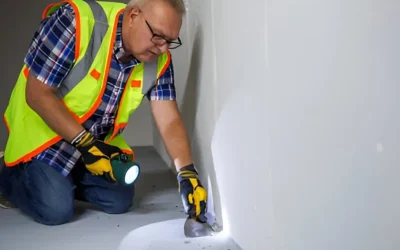
Before a single piece of equipment arrives on site, we need to know exactly what we are dealing with. We conduct a thorough analysis of the geotechnical conditions beneath your property. This testing tells us the specific soil type, moisture levels, and exactly how deep we must dig to reach a stable, load-bearing layer of earth. Guesswork has no place in structural engineering.
Step 2 – Installation of Helical Piles
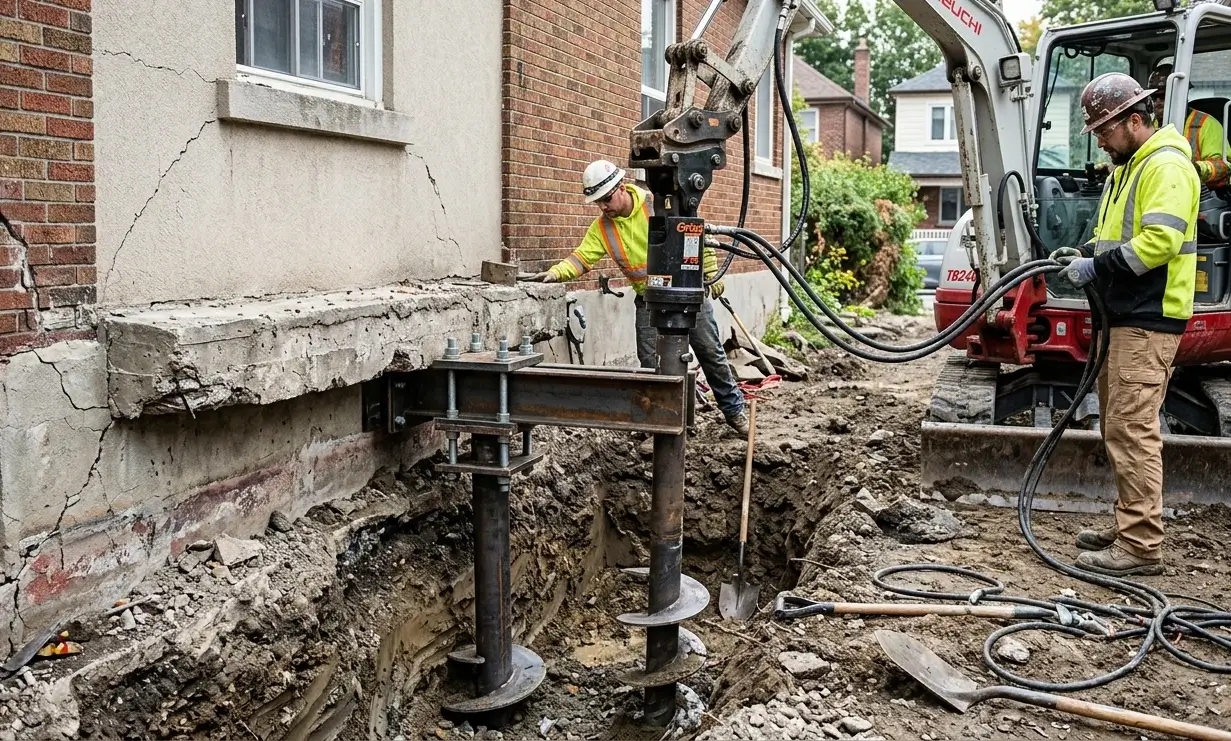
Once the engineering plan is set, the installation begins. Using specialized, compact hydraulic torque motors, we rotate the piles directly into the ground alongside your failing foundation. The helices allow the shaft to slice through the soil with minimal disturbance to your landscaping. During this process, we continuously monitor the installation torque. In the world of helical piles, installation torque directly correlates to the pile’s load-bearing capacity.
Step 3 – Load Transfer to Stable Soil Layers
When the pile reaches the target depth and achieves the required torque, it is time to connect it to your home. We install heavy-duty steel underpinning brackets that securely attach the top of the steel shaft to the underside of your concrete foundation footing. Once secured, the weight of your structure is shifted off the weak topsoil and transferred entirely onto the piles. In this phase, the piles seamlessly handle both compression and tension loads, locking the foundation firmly in place.
Step 4 – Lifting / Stabilizing the Structure
With the weight fully supported by the deep piles, we use hydraulic jacks to carefully lift the sunken foundation back toward its original, level position. Even in situations where a full vertical lift is not feasible due to the age or rigidity of the house, the foundation is permanently stabilized. The downward movement stops entirely.
Why Helical Piles Are Ideal for Underpinning
Engineers and contractors highly recommend helical piles for underpinning for several practical reasons. First, they require minimal excavation. We do not need to tear up your entire yard or destroy your driveway to install them. Second, they boast very fast installation times. A project that might take weeks with poured concrete can often be completed in just a few days with screw piles.
Third, they offer immediate load-bearing capacity. There is no waiting around for the concrete to cure before we can transfer the weight of the house. Fourth, their engineered design means they perform exceptionally well across a range of soil conditions, from loose sand to dense, problematic clay. Finally, living in Canada means dealing with harsh winters. Unlike poured concrete, helical pile installation is a year-round solution. Frozen ground does not stop a hydraulic torque motor.
Helical Piles vs Other Underpinning Methods
When property owners research how to save their homes, they often look for a comparison of underpinning methods to understand their choices.
Concrete Underpinning
Traditional mass concrete underpinning involves digging deep trenches out in sections below the existing footings and filling those voids with concrete. When considering helical piles vs concrete underpinning, traditional concrete is messy, requires significant excavation, takes a long time to cure, and ultimately still relies on the soil directly beneath the new concrete being stable.
Push Piers / Resistance Piles
Push piers are steel tubes driven into the ground using the sheer weight of the structure itself as resistance. They can be very effective, but they require the building to be heavy enough to physically push the pier down to bedrock. Lighter residential homes or single-story buildings often do not provide enough weight for this method to work properly.
Helical Piles Comparison
| Feature | Helical Piles | Concrete Underpinning | Push Piers |
| Cost | Moderate to High (high ROI) | Moderate (labor intensive) | Moderate to High |
| Installation Time | Fast (days) | Slow (weeks) | Moderate (days to weeks) |
| Soil Adaptability | Excellent in all soils | Poor in weak/wet soils | Good, but needs heavy structure |
| Performance | Immediate load transfer | Must cure before loading | Relies on structure weight |
Benefits of Helical Pile Underpinning
Opting for foundation underpinning with helical piles delivers long-term stability that you can trust. Because the piles bypass the active soil zones affected by weather and moisture, your home remains firmly planted regardless of the seasons.
You also benefit from significantly reduced disruption to your property. Since the equipment used is relatively compact, your landscaping, walkways, and patios are often spared from major damage. The highly predictable performance of helical piles means you are not relying on hope. The load capacity is calculated precisely on site.
Finally, while the initial cost of foundation underpinning is a notable investment, it provides superior cost efficiency over time. Fixing the problem correctly the first time prevents the need for endless, compounding repairs in the future.
When Are Helical Piles the Best Choice?
Helical piles are highly versatile, but they truly shine in specific scenarios. They are the premier choice for residential homes with settling foundations, especially those that are relatively lightweight, such as timber-framed houses.
They are also an excellent choice when adding additions to existing structures. If your current foundation cannot bear the weight of a new second story, helical piles can increase the load capacity without rebuilding the whole basement.
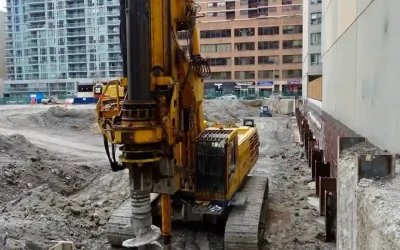
Do you live in a tight urban neighbourhood in Toronto? Helical piles are ideal for limited-access sites. Hydraulic installation equipment can fit into narrow spaces between houses where large excavation machinery cannot. Furthermore, if your property sits on unstable or weak soils, such as high water tables or deep fill dirt, helical piles are often the only reliable choice.
How to Know If Your Foundation Needs Underpinning
Identifying the problem early can save you a lot of money and stress. You need to watch for the telltale signs of foundation settlement. Are you noticing large, stair-step cracks in your exterior brickwork or masonry? Inside, look for diagonal drywall tears radiating from the corners of your window and door frames.
Active crack formation is a clear signal that the structure is moving. Also, pay attention to the functionality of your home. If doors that used to swing freely are suddenly rubbing against their frames, or if you drop a marble and it rapidly rolls to one side of the room, you are likely experiencing differential settlement.
If you notice these symptoms, early intervention is critical. Catching the movement before it damages the structural framing of your roof or walls is vital. When these signs appear, it is time to call a professional for a proper assessment.
Also Read: Signs Your Home Needs Helical Piles Before Damage
Why Proper Engineering Matters in Underpinning Projects
We offer a variety of foundation stabilization solutions, but none of them are do-it-yourself projects. The risk of improper installation is immense. If a contractor miscalculates the soil capacity or installs the piles at the wrong angle, your home could suffer even worse damage than before.
This is why proper engineering matters. Detailed geotechnical reviews and precise load calculations determine how many piles are required, how deep they must go, and where they should be placed along the footing. Cutting corners on the engineering phase of a project is a recipe for disaster. We focus on engineering to guarantee your property’s long-term structural safety.
Final Verdict: Are Helical Piles the Right Solution for Your Foundation?
When you step back and look at the whole picture, it is clear why engineers and contractors trust this system. Helical piles work best when you need guaranteed, verifiable stability without the massive mess of traditional excavation. They are often preferred because they actively transfer your building’s weight to deep, stable earth, entirely bypassing the problematic soil that caused the issue in the first place.
If you are currently weighing your residential foundation repair options, it is time to embrace solution-based thinking. Do not settle for temporary fixes that only mask the symptoms. A properly engineered helical pile system will securely anchor your home, protecting your most valuable asset for a lifetime.
Work With Specialists Who Understand Foundation Behaviour
At GAMCON, we do not just sell repairs. We deliver structural certainty. We bring deep engineering expertise to every single job site, ensuring that we understand the exact mechanics of your soil before we begin.
We believe that a successful project starts with an accurate diagnosis. Every home is unique, which is why we focus on individualized solutions that fit your specific property, rather than pushing a one-size-fits-all approach. If you are ready to secure your property’s future, we are here to help.
Worried About Foundation Settlement? Let’s Take a Closer Look Before It Gets Worse.
Do not let foundation anxiety keep you up at night. Share your symptoms or site details with us, and we will provide a practical, honest assessment. We want you to fully understand your options before committing to any major repairs.
Call us today to find out if helical piles are the right solution for your foundation and request a foundation assessment with GAMCON!