Starting a major construction project on unpredictable ground is more than enough to keep any developer awake at night. You have tight deadlines, strict budgets, and the heavy weight of structural integrity resting squarely on your shoulders. Deep foundation systems are your saving grace in these situations, and helical piles, frequently known as screw piles, have truly revolutionized how we secure structures across Canada.
However, if you walk onto any job site and chat with the foundation crew, you will likely encounter a familiar debate echoing over the hum of the excavators. Which type of pile is actually the right choice? The conversation inevitably turns to square-shaft vs. round-shaft helical piles.
It is a common misconception that one type of shaft is universally superior to the other. The truth is much more nuanced. Choosing the right structural support is similar to picking the right tires for a heavy duty truck. You would not use slick highway tires to navigate a muddy, off-road logging trail. The same logic applies to your foundation. Your final choice hinges entirely on specific soil conditions, structural load requirements, and the unique application of your building project. We understand that wading through these technical waters can be a bit overwhelming. That is exactly why we are going to provide clear, engineer-backed guidance on choosing the right pile type for your next build.
Key Takeaways for Your Next Project
- Purpose drives the choice: Square shafts are typically your best bet for penetrating dense soils, while round shafts excel at resisting lateral forces in softer ground.
- It is not just about weight: Understanding the difference between your axial load and lateral load resistance is critical to specifying the correct pile shaft geometry.
- Combo piles exist: You do not always have to choose just one. Hybrid systems can offer the best of both worlds for complex soil profiles.
- Data is your best friend: A thorough geotechnical report will save you time, money, and headaches by removing the guesswork from your foundation design.
What Are Helical Piles?
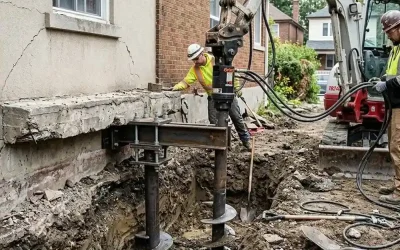
Before we jump into the deep end of the debate, let us take a moment to review the basics. What exactly are these vital construction elements? At their core, helical piles are factory-manufactured steel foundation pins featuring one or more helical bearing plates welded to a central shaft. Think of them as giant, heavy-duty screws designed to anchor structures firmly into the earth.
Their primary purpose is straightforward but vital. Helical piles are used to transfer structural loads into stable soil layers located deep beneath the surface. Instead of relying on the weak, unpredictable topsoil, these piles bypass the problem areas and anchor into load-bearing strata.
Why does the shaft type matter so much? The shaft is the main conduit that carries the weight of your building down to those helical plates. Its shape, thickness, and design dictate how it interacts with the surrounding soil, how much twisting force it can withstand during installation, and how well it keeps your building standing tall against various forces of nature.
Square Shaft vs Round Shaft: What’s the Core Difference?
When comparing these two foundation heavyweights, the visual and structural differences are quite striking. Let us break down the basic anatomy.
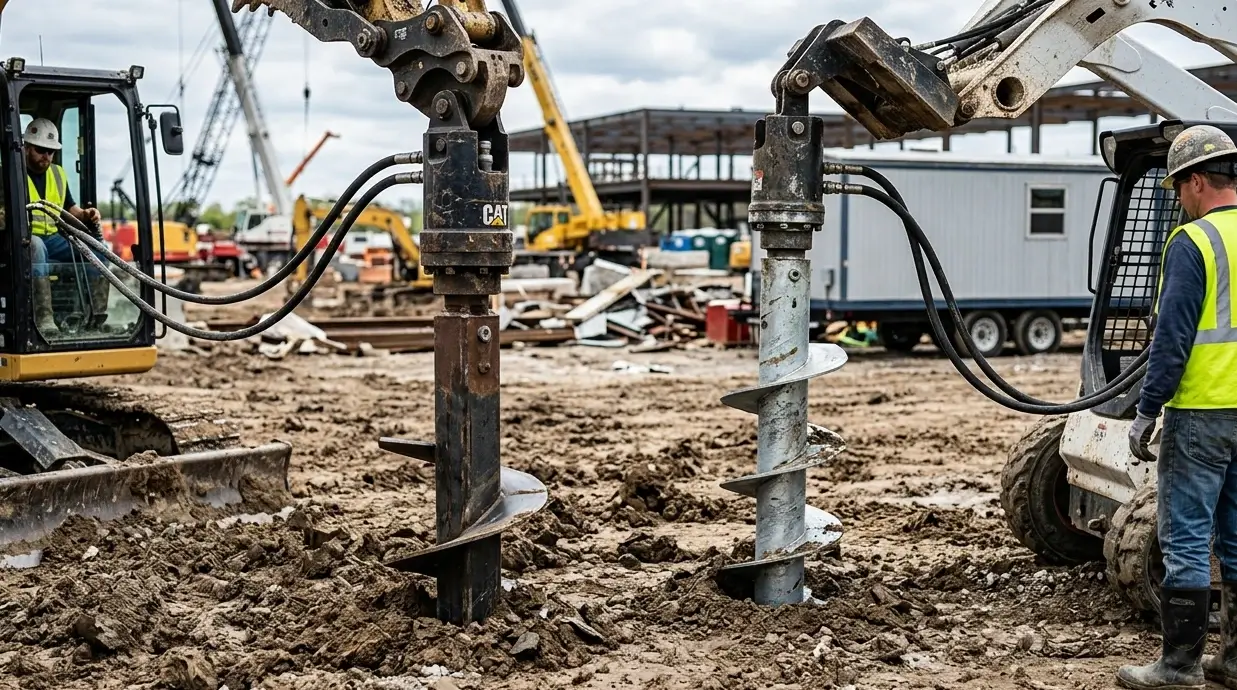
- Square shaft: These piles are constructed from a solid steel bar. Because they are completely solid, they are typically smaller in cross-sectional area. This slender profile gives them a distinct advantage when it comes to piercing through tough materials.
- Round shaft: These piles are made from a hollow steel pipe. While they lack the solid core of their square counterparts, their tubular design and larger diameter provide a significant increase in stiffness and surface area.
To put it simply, round shafts are tubular and larger, while square shafts are solid and smaller. This fundamental difference in pile shaft geometry dictates almost every other aspect of their performance in the field.
Load Capacity Comparison: Axial vs Lateral Performance
To make an informed decision, you need a thorough helical pile load capacity comparison. Buildings do not just push straight down into the dirt. They are subjected to a complex variety of forces that your foundation must resist.
Axial Load (Compression & Tension)
Axial loads are the forces that run straight up and down the length of the pile. Compression is the downward weight of the building pressing the pile into the earth. Tension is the upward pulling force, often caused by wind uplift or expansive soils trying to heave the structure out of the ground.
This is where the square shaft helical pile advantages become very apparent. Because of their solid, compact nature, square shafts offer higher torque efficiency. They can withstand immense twisting forces during installation without damage, allowing them to be driven deeply into load-bearing soils to achieve high axial capacities. They are fantastic at holding things down and holding things up.
Lateral Load Resistance
Lateral loads are the horizontal forces pushing against your structure. Think of strong winds hitting the side of a tall building, retaining walls holding back heavy earth, or even seismic activity.
This arena highlights the primary round shaft helical pile benefits. A hollow tube offers vastly superior resistance to bending compared to a solid bar of similar weight. The larger surface area of the round pipe also engages more of the surrounding soil, providing greater lateral load resistance. Round shafts perform better under lateral loads, while square shafts excel in axial loads.
Also Read: Helical Piles vs Caissons: Which Foundation Suits Your Project
Soil Conditions: Which Shaft Works Best Where?
Geotechnical engineering tells us that no two job sites are exactly alike. Soil conditions (soft, dense, rocky) dictate everything about a foundation project. Determining the best helical pile for soil type is a critical step in the planning phase.
Dense or Rocky Soil → Square Shaft
Have you ever tried pushing a thick, blunt marker into a block of hard clay? It requires a lot of effort and usually results in a mess. Now imagine pushing a sharp needle into that same clay. It glides in with much less resistance. This is exactly why square shafts are the champions of dense, compacted, or rocky soils. Their small cross-section displaces less earth, allowing them to penetrate difficult terrain efficiently.
Soft or Weak Soil → Round Shaft
If you are building over soft clays, loose sands, or peat, you need stability. A slender square shaft in soft soil might wobble under pressure. A round shaft, with its wider diameter, acts like a sturdy column. It prevents the pile from shifting sideways in the weak earth.
Mixed Soil Conditions → Combination piles
What happens when you have twenty feet of soft muck sitting on top of dense, rocky glacial till? You use combination piles. You can start with a square lead section to penetrate the hard stuff at the bottom, and then seamlessly transition to a round shaft extension for the upper portion to provide stability through the soft muck.
Ultimately, square shafts penetrate dense soil more efficiently, while round shafts perform better in soft soils.
Installation Efficiency & Equipment Requirements
Time is money in the construction business. If your team is struggling to get piles into the ground, your profit margins are shrinking by the minute. Helical pile installation efficiency is directly tied to the type of shaft you choose.
- Square shafts: Because they displace less soil, they offer easier penetration. They encounter significantly less resistance as they are rotated into the earth. This means you can often achieve your required depth and torque capacity using smaller equipment. Smaller equipment means lower mobilization costs and easier access to tight urban job sites.
- Round shaft: The larger diameter of the hollow pipe creates higher friction against the soil. More surface area rubbing against the earth means more resistance. Consequently, round shafts require substantially more installation torque to reach their target depth. You will need larger, more powerful hydraulic drive motors and heavier machinery to get the job done.
As a general rule, square shafts experience less resistance and allow more efficient installation.
Buckling, Stability & Structural Performance
When evaluating round shaft vs square shaft piles, we have to talk about what happens when things get unstable.
- Round shaft: If a pile passes through air, water, or very soft soils before reaching its bearing depth, it loses the lateral support normally provided by the ground. In these situations, the hollow pipe design provides much better buckling resistance. The geometry of the tube inherently possesses higher bending strength, keeping your foundation secure even when the surrounding earth is unsupportive.
- Square shaft: A solid bar has limited lateral stability. Over long unsupported distances, it is more prone to bowing or buckling under heavy loads. There is a tangible risk in soft soils if a square shaft is expected to support a heavy structure without adequate lateral bracing.
For these reasons, round shafts are preferred when buckling or lateral forces are a concern.
Cost Considerations: Which Option Is More Economical?
We know you are looking at the bottom line. Balancing cost and quality is the bread and butter of successful project management.
- Square shaft: Generally, square shafts offer lower material and installation costs. They use less steel per foot and, because they are easier to install, require less machine time and fuel. Their highly efficient torque-to-capacity ratio makes them very attractive for standard applications.
- Round shafts: These cost more. You are paying for more steel, more welding, and the heavier equipment needed to install them. However, that premium buys you better performance in certain conditions where a square shaft would simply fail.
To summarize the financial side of things, square shafts are often more cost-effective for moderate loads.
When to Use Square Shaft Helical Piles
Let us look at some practical, real-world application scenarios. You should seriously consider specifying square shaft piles when your project involves:
- Light to moderate loads, such as residential foundations or small commercial builds.
- Dense or rocky soil where penetration is the primary challenge.
- Tight-access job sites where manoeuvring large excavators is impossible.
- Tension applications, like tiebacks for retaining walls or anchoring guy wires, where the high torque capacity yields excellent pull-out resistance.
When to Use Round Shaft Helical Piles
On the flip side, you should lean toward the tubular option when you are facing:
- Soft or loose soil conditions that offer little to no lateral support.
- High lateral loads, such as those found in retaining walls, sound barriers, or tall structures exposed to high winds.
- Buckling concerns due to piles passing through water, peat, or void spaces.
- Large-scale or critical structures where maximum foundation stability is non-negotiable.
Square vs Round Shaft: Side-by-Side Comparison Table
To make your helical pile types comparison as easy as possible, here is a quick reference guide that breaks down the essentials.
| Feature | Square Shaft Helical Piles | Round Shaft Helical Piles |
| Shaft type | Solid steel bar | Hollow steel pipe |
| Load capacity | Exceptional axial capacity (compression and tension) | Superior lateral capacity and bending resistance |
| Soil suitability | Best for dense, rocky, or hardpan soils | Best for soft, loose, or weak soils |
| Installation efficiency | High efficiency, cuts through soil easily | Lower efficiency, creates more soil friction |
| Equipment needs | Smaller, lighter hydraulic equipment | Larger, heavier machinery with high torque outputs |
| Cost | Generally more economical | Higher initial material and installation costs |
| Risk factors | Susceptible to buckling in soft soils | Refusal in dense soils before reaching target depth |
Can You Combine Both? (Hybrid / Combo Piles)
Are you feeling torn between the two options? What if you need the penetrating power of a solid bar but the buckling resistance of a hollow tube? Fortunately, the engineering world has an elegant solution.
An explanation of combo piles is surprisingly simple. A combo pile uses a square shaft for the lead section (the part with the helical plates that enters the ground first) and a round shaft for the plain extensions that follow.
These are used when you need to anchor deeply into a hard layer of earth, but you have to pass through a thick layer of soft, unsupportive muck to get there. The benefits and cost considerations make them an appealing middle ground. You avoid the massive installation friction of driving a round lead through dense soil, but you gain the lateral stability you need near the surface. Combo piles combine penetration efficiency with lateral strength.
Also Read: Helical Pile Installation Guide for Residential & Commercial Use
Key Factors to Consider Before Choosing
Helical pile design considerations are not something you should leave to guesswork. Before making a final call, you need to evaluate several critical pieces of the puzzle:
- Soil report and geotechnical data: Never skip this. A detailed boring log tells you exactly what is hiding beneath the surface.
- Load requirements: Carefully calculate both your axial and lateral forces.
- Site access constraints: Can you physically get a fifty-ton excavator into the backyard of a downtown Toronto property? If not, your pile choice might be made for you.
- Budget: Weigh the upfront costs against the long-term structural benefits.
- Project timeline: Consider how the installation speed will affect your overall construction schedule.
- Corrosion considerations: Urban environments and specific soil chemistries can degrade steel. Ensure your chosen pile type has adequate galvanization or corrosion protection for its intended lifespan.
Final Verdict: Which Helical Pile Type Is Right for You?
If you have made it this far, you already know the answer. There is simply no one-size-fits-all answer in the world of deep foundations. Your final decision depends entirely on a careful analysis of the soil, the load, and the project complexity.
Take a step back, review your geotechnical reports, consult with your structural engineers, and use the framework we have provided to make an educated, data-driven choice.
Securing Your Project’s Future: A Foundation Built on Expertise
We have covered a lot of ground today, from the physics of axial and lateral loads to the practical realities of manoeuvring heavy equipment on a tight job site. Whether you end up relying on the piercing efficiency of a solid square shaft or the robust stability of a hollow round pipe, the key takeaway remains the same. Your foundation dictates the lifespan, safety, and success of your entire build.
Choosing the right system is not about guessing; it is about rigorous engineering, soil mechanics analysis, and understanding exactly how different materials behave under pressure. Work with engineers who specify the right solution the first time. Making engineering-backed decisions early in your project drastically reduces the risk of costly failures down the road. It ensures that you achieve an optimized cost-performance balance, keeping your stakeholders happy and your structures standing strong for generations to come.
When you are ready to stop guessing and start building with confidence, the team at GAMCON is here to help. We are dedicated to providing clear, technical expertise to contractors, developers, and project managers across the industry. Do not leave your foundation up to chance. Request a Helical Pile Consultation with GAMCON today, and let us ensure your next project starts on solid ground.